Rock Climbing: Nevada's Vertical World
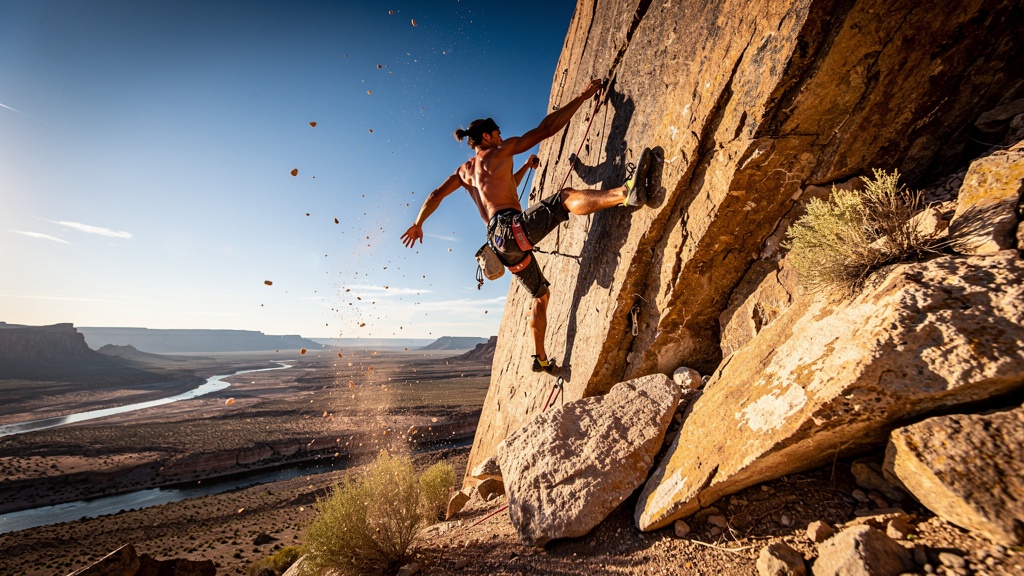
Nevada occupies a place of genuine distinction in the North American rock climbing world. The state contains two of the continent's most celebrated climbing areas — Red Rock Canyon and the Black Canyon of the Truckee River — as well as dozens of less well-known crags and walls that offer exceptional climbing across a remarkably diverse range of rock types and styles. For climbers, Nevada is not merely a state you pass through on the way to Utah or California; it is a destination that can occupy weeks or months of dedicated climbing exploration without exhausting its offerings.
Red Rock Canyon's climbing is primarily on the Aztec Sandstone formation — a coarse-grained, sometimes pebble-studded orange and red sandstone that provides excellent friction but also sharp edges that are hard on soft rock shoes and skin. The scale of Red Rock's walls is part of what distinguishes it from other desert climbing areas: where many Southwest crags offer single-pitch routes of 50–100 feet, Red Rock has multi-pitch routes that continue for 1,000, 2,000, or 3,000 feet of vertical rock face. The Crimson Chrysalis route on Rainbow Wall (1,200 feet, rated 5.8), Oak Creek Canyon's Nightcrawler (2,200 feet, 5.9), and the Black Widow route on Brass Wall (1,500 feet, 5.11a) are among the most celebrated multi-pitch routes in the American Southwest and are on the tick list of every serious trad climber.
Sport climbing at Red Rock Canyon is concentrated in the Calico Hills and developed wall areas, where bolted routes range from accessible single-pitch climbs at 5.8–5.10 difficulty to extremely challenging test pieces at 5.13 and 5.14. The density of high-quality sport routes in the Calico Hills section — often described as having the finest concentration of sport climbing terrain outside of Spain's Costa Blanca — has made Red Rock a winter destination of choice for European climbers seeking warm temperatures and consistent sunshine when European crags are cold and wet.
World-Class Skiing at Lake Tahoe
The ski resorts of the Lake Tahoe basin, many of which straddle the Nevada-California border or are easily accessible from northern Nevada, collectively constitute one of the finest concentrated skiing destinations in North America. The Sierra Nevada receives some of the heaviest snowfall of any mountain range in the world — base depths of 300 inches (25 feet) are not uncommon at higher elevations during good snow years — and the combination of consistent snow, spectacular mountain scenery, and the proximity of Reno and Sacramento (California's state capital) creates a skiing market of substantial size and sophistication.
Palisades Tahoe (formerly Squaw Valley and Alpine Meadows, now combined under a single pass system) is the dominant force in Lake Tahoe skiing — a massive resort with over 6,000 acres of skiable terrain spread across two separate mountain bases, connected by a gondola and a shared lift pass. Squaw Valley hosted the 1960 Winter Olympics and retains a significant historical and cultural cachet alongside its formidable technical skiing resources. The resort's combination of groomed beginner terrain, extensive intermediate cruising runs, and extreme expert terrain — including the legendary KT-22 chair with its sustained steep faces and Headwall couloirs — makes it capable of satisfying skiers and snowboarders across the entire ability spectrum.
Mount Rose Ski Tahoe, located directly above Reno on the Mount Rose Highway (State Route 431), offers the highest base elevation of any Lake Tahoe ski resort at 8,260 feet and the fastest access from Reno — approximately 30 minutes from the city centre to the mountain base on a clear road. The resort's combination of reliable natural snow, high-quality grooming, and a relatively uncrowded environment compared to the larger resorts makes it a favourite among Reno locals and visitors who prefer to avoid the longer drive to the south shore. Mount Rose's Chutes — a series of 35-to-40-degree chute descents dropping over 1,200 feet from the summit — provide some of the most challenging inbounds expert skiing in the Tahoe area.
Water Adventures: Rivers, Lakes & Reservoirs
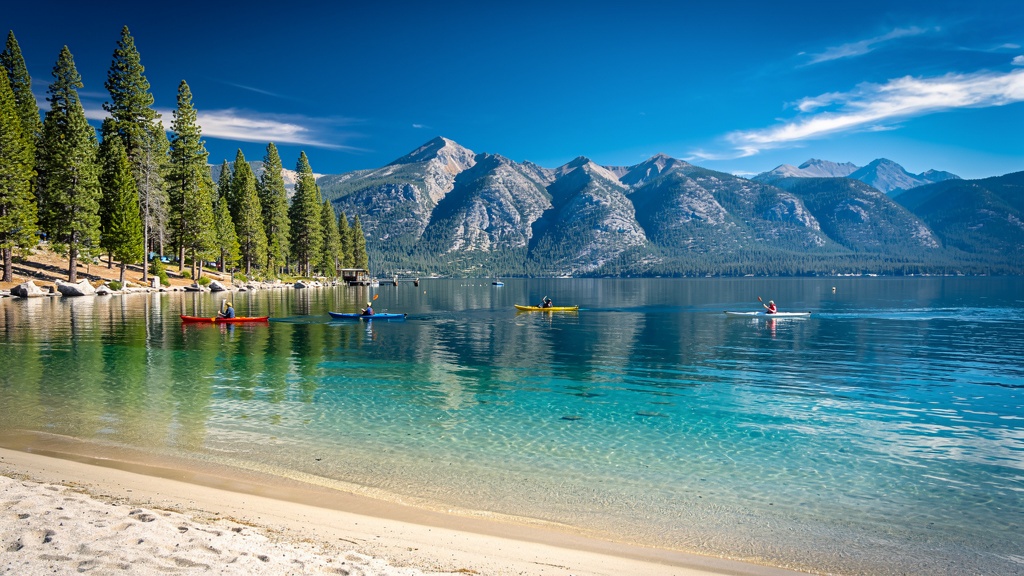
Despite being the driest state in the continental United States, Nevada offers a surprising variety of water-based adventure opportunities. The state's rivers, reservoirs, and alpine lakes provide settings for kayaking, whitewater rafting, stand-up paddleboarding, fishing, swimming, and sailing across a range of conditions from serene flatwater to technical whitewater.
The Colorado River below Hoover Dam, flowing through Black Canyon and the lower reaches of Lake Mead National Recreation Area, is one of Nevada's premier kayaking destinations. The Black Canyon Water Trail, a 12-mile downriver route from the base of Hoover Dam to Willow Beach, Arizona, is one of the most scenically extraordinary paddling routes in the Southwest — a canyon of ancient volcanic rock, thermal hot springs accessible from the water, and towering canyon walls that glow rust-red and black in the afternoon light. The thermal springs, which emerge at temperatures of 80–105°F and mingle with the cool river water, create bathing pools of exceptional comfort accessible only by boat.
The Truckee River, which flows from Lake Tahoe through Reno and eventually into Pyramid Lake, offers a range of kayaking and rafting experiences from the flat, calm stretches suitable for beginners and families to the technical whitewater reaches of the Truckee Canyon upstream of Reno. The Truckee Canyon run, accessed from the town of Verdi west of Reno, is a Class III–IV whitewater experience during high water periods in spring that rewards skilled paddlers with continuous rapids in a spectacular canyon setting.
Off-Road Driving & OHV Adventures
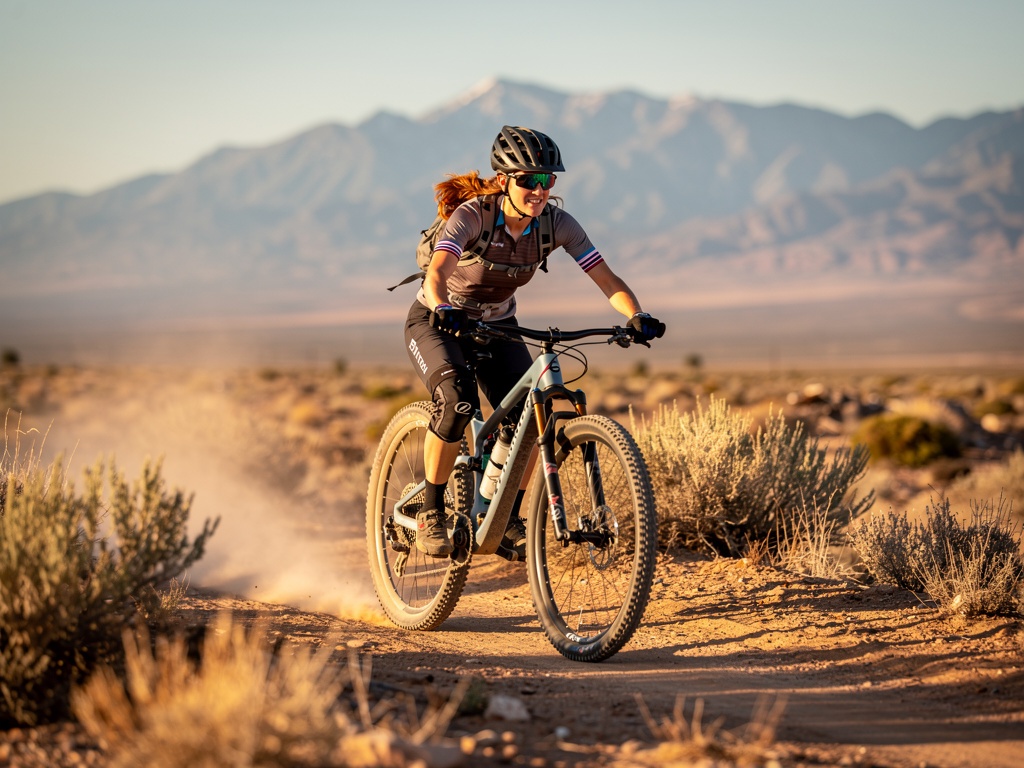
Nevada's vast public lands — administered primarily by the Bureau of Land Management — contain thousands of miles of legally designated off-highway vehicle routes and primitive roads that provide access to some of the most remote and spectacular landscapes in North America. The OHV culture in Nevada is deeply embedded in the state's rural identity, and the infrastructure for off-road adventure — staging areas, trail maps, repair services — is well developed in most parts of the state.
The Black Rock Desert, a vast playa in northern Nevada approximately 120 miles north of Reno, is one of the world's great off-road environments. The playa's surface — a perfectly flat, featureless expanse of alkaline mud dried to concrete hardness — extends for more than 100 square miles and provides an open space of extraordinary dimension. The Black Rock is where land speed records have been set and where the Burning Man festival creates its temporary city each year. For off-road drivers, the playa's surface allows high-speed driving in any direction without roads or tracks, creating a freedom of movement available nowhere else.
The Nevada landscape also contains hundreds of miles of historic mining roads and tracks connecting the ghost towns that dot the mountains and valleys of the central and eastern state. Exploring these remote corridors by 4x4 vehicle reveals Nevada's mining heritage in vivid physical detail: abandoned mill buildings, collapsed mine shafts, rusting machinery, and occasionally intact ghost towns where the structures of a nineteenth-century mining community stand in remarkable preservation. Belmont, Berlin, and Gold Point are among the finest preserved ghost towns accessible by reasonable dirt road, and the landscapes they inhabit are often of considerable scenic beauty independent of their historical interest.
Stargazing: Nevada's Most Spectacular Free Show
Nevada's night sky is, in the truest sense, one of the natural wonders of the United States — and it is free, available year-round, and requires no equipment more sophisticated than your own eyes to begin appreciating. The combination of low population density, dry desert air (which is substantially more transparent to starlight than humid coastal air), high elevation across much of the state, and limited urban light pollution creates conditions for astronomical observation that are almost unique in the developed world.
The International Dark-Sky Association has designated several areas of Nevada as Dark Sky Parks or Dark Sky Communities, recognising their exceptional darkness and commitment to preserving it. Great Basin National Park, as previously noted, holds International Dark Sky Park status — one of only 80 such designations worldwide. The park hosts regular star parties at which amateur and professional astronomers bring telescopes for public viewing, and the ranger-led astronomy programmes offered on clear evenings are among the most memorable educational experiences available in any of America's national parks.
The town of Elko in northeastern Nevada hosts the Great Basin Astronomy Festival, held each autumn when the atmospheric conditions are most favourable. Participants gather on the dark lakebed of Ruby Lake National Wildlife Refuge — a shallow, alkaline lake system surrounded by the Ruby Mountains — for several nights of intense astronomical observation under skies of extraordinary quality. The festival draws professional astronomers from universities and observatories across the country alongside amateur enthusiasts who haul sophisticated equipment to the remote site in pursuit of the perfect observing conditions that only locations like this, far from any significant light source, can provide.
Nevada's Most Scenic Drives
Nevada's highway network includes some of the most spectacular and least-travelled scenic drives in the United States. US Highway 50 — officially designated "The Loneliest Road in America" by Life magazine in 1986 — crosses Nevada east to west through the heart of the Great Basin, passing through a landscape of elemental vastness and geological drama. The route traverses seven mountain ranges and crosses several stretches of more than 100 miles between towns, passing through communities like Austin, Eureka, and Ely that retain a palpable sense of the nineteenth-century West.
State Route 375, officially designated "The Extraterrestrial Highway" and located near the classified Nellis Air Force Base test range known to the public as Area 51, traverses one of the most remote sections of Nevada highway. The route's proximity to classified military facilities, the frequency of reported unusual aerial phenomena by travellers and local residents, and the general atmosphere of remote desert strangeness have made it one of the most famous stretches of highway in the United States. The town of Rachel, Nevada — population approximately 50 — is the only settlement on the route and hosts the Little A'Le'Inn, a café and motel whose walls are decorated with UFO memorabilia and signed testimonials from visitors who have had unusual experiences in the area.
The Mount Charleston Scenic Byway northwest of Las Vegas provides the most dramatic contrast to the Strip available within an hour's drive of the city. The highway climbs from the valley floor through pinyon-juniper woodland to ponderosa pine and white fir forest, eventually reaching the Spring Mountains at elevations above 11,000 feet where the temperature can be 30 degrees cooler than on the desert floor below. In winter, Kyle Canyon and Lee Canyon receive enough snowfall to support a modest ski area, and the mountain hiking trails are blanketed in snow from December through March — an otherworldly contrast with the 60-degree golf weather of the Las Vegas valley a vertical mile below.
⛺ Camping Tip: Nevada offers exceptional free dispersed camping on Bureau of Land Management lands throughout the state. With no permit required and 14-day stay limits, BLM camping provides access to remote landscapes impossible to reach from paved roads, at no cost. Responsible dispersed camping requires carrying out all waste, minimising campfire impacts (check current fire restrictions), and camping only in already-disturbed sites where possible to protect fragile desert soils.
For the traveller prepared to look beyond the obvious, Nevada offers a lifetime of outdoor adventure. The state's sheer scale, its diversity of landscape, its exceptional public land access, and the genuine wildness that still persists across much of its area make it one of the most rewarding outdoor destinations in North America. Whether you come for world-class rock climbing, powder skiing, desert wilderness hiking, or simply the desire to stand under a blazing canopy of stars in absolute silence, Nevada will deliver an experience that stays with you long after you have returned to whatever corner of the world you call home.