Lake Mead: America's Largest Reservoir
Lake Mead National Recreation Area, the largest national recreation area in the United States by area, straddles the Nevada-Arizona border and encompasses the remarkable landscape created by the construction of Hoover Dam on the Colorado River. Lake Mead itself, the reservoir behind the dam, was the largest artificial reservoir in the United States by volume when it was created in the 1930s, and it remains one of the largest in the world. The lake's blue-green water, set against the context of the Mojave Desert and the dramatic geology of the surrounding canyon country, creates a visual landscape of considerable beauty and complexity.
The recreation area offers an extensive array of water-based activities: boating, jet skiing, wakeboarding, fishing, kayaking, and paddleboarding are all popular on Lake Mead's 550-mile shoreline. The fishing is particularly noteworthy — Lake Mead supports populations of striped bass, largemouth bass, smallmouth bass, black crappie, channel catfish, and several other species, and produces trophy-sized catches on a regular basis. Several marinas around the lake's perimeter offer boat rentals, guided fishing tours, and water sports equipment hire for visitors who arrive without their own equipment.
Hoover Dam itself, the engineering marvel that created Lake Mead, is one of the great monuments of American infrastructure and deserves a substantial visit. The dam was built between 1931 and 1936 by a consortium of construction companies employing thousands of workers during the depths of the Great Depression, and its completion required innovative construction techniques, unprecedented organisational logistics, and a workforce whose courage and skill were equal to the scale of the challenge. The dam's Art Deco architectural detailing — unusual for a utilitarian structure of this scale — reflects the era's belief that functional infrastructure could and should aspire to aesthetic grandeur. Tours of the dam's interior are offered daily and reveal the remarkable engineering of the hydroelectric generators, penstock tunnels, and powerplant that continue to generate electricity for Nevada, Arizona, and California.
More Nevada Parks & Protected Landscapes
Nevada's park system extends well beyond its most famous properties. Cathedral Gorge State Park in eastern Nevada is one of the state's most unusual and visually striking landscapes — a canyon carved by erosion into the soft bentonite clay deposits of an ancient lake bed, creating a labyrinthine network of narrow slot canyons, spire formations, and cave-like alcoves. The soft, pale grey clay of Cathedral Gorge erodes into forms of extraordinary delicacy and variety: some sections resemble Gothic cathedral architecture, others suggest abstract sculpture, and others create narrow passages barely wide enough to walk through. The park sees relatively few visitors compared to the state's better-known destinations, making it one of Nevada's best-kept geological secrets.
Berlin-Ichthyosaur State Park in central Nevada combines geological and paleontological significance in a single location. The park preserves the fossil remains of Shonisaurus popularis — an ichthyosaur species unique to Nevada and one of the largest marine reptiles that ever lived, reaching lengths of up to 50 feet. The fossils were discovered in 1928 and the excavation site has been preserved largely as found, with the bones visible in their original positions within the rock matrix. The town of Berlin, a largely intact nineteenth-century silver mining settlement on the park grounds, adds a human historical dimension to the paleontological interest.
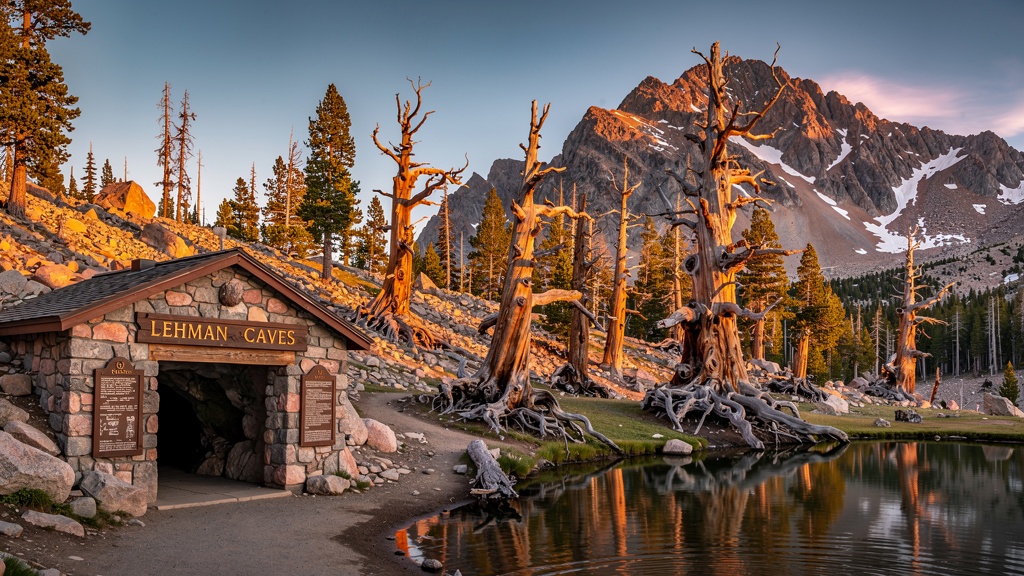
Cave Lake State Park near Ely in eastern Nevada offers a high-desert reservoir environment popular with anglers seeking brown and rainbow trout in a setting of striking mountain scenery. The park's campgrounds are among the most peaceful in the state, situated in a canyon surrounded by pinyon-juniper woodland and accessed via a scenic highway that traverses some of the most remote and beautiful country in Nevada. For visitors making the drive across US Highway 50 — "The Loneliest Road in America" — Cave Lake State Park is an excellent stop combining natural beauty with comfortable camping facilities.
Nevada's Dark Skies: Astronomical Paradise
One of Nevada's most extraordinary natural assets is one that is completely invisible during the day: its darkness. Nevada contains some of the darkest skies in the continental United States, a consequence of the vast areas of uninhabited desert and mountain terrain that have no artificial lighting. The Great Basin Desert, which covers most of central and eastern Nevada, is so sparsely populated and so remote from major urban centres that its night skies approach the conditions of pre-industrial darkness — a quality that is becoming vanishingly rare anywhere in the developed world.
Great Basin National Park has been officially certified as an International Dark Sky Park by the International Dark-Sky Association — a designation that recognises sites where the preservation of natural darkness has been formally committed to and where the quality of night sky visibility meets defined astronomical standards. On a clear, moonless night at Great Basin, the Milky Way is not merely visible as a faint band of light but blazes across the sky in its full three-dimensional glory, its dust lanes and star clouds visible to the naked eye. The Andromeda Galaxy, some 2.5 million light-years distant, is easily visible without optical aid. The park hosts regular astronomy programmes led by park rangers and volunteer astronomers, offering telescope viewing and educational talks on the science and culture of the night sky.
The Nevada Triangle — the remote area of central Nevada between Tonopah, Ely, and Winnemucca — offers perhaps the best sustained dark sky conditions in the lower 48 states. The Burning Man festival, held annually in the Black Rock Desert north of Reno, draws thousands of dedicated stargazers who come in part for the extraordinary spectacle of the desert night sky. Observers under perfectly dark skies can typically count over 3,000 individual stars with the naked eye, compared to the 10–30 stars visible from a major city like Las Vegas under typical conditions.
🌿 Leave No Trace: Nevada's parks and wilderness areas are fragile ecosystems that require thoughtful visitation. Stay on designated trails, pack out all trash, never touch or remove archaeological artefacts or fossils, and always check fire restrictions before lighting any open flame. The desert landscapes of Nevada are far more delicate than they appear — cryptobiotic soil crusts, which appear as dark, irregular patches on the desert surface, can take decades to recover from a single footstep.
Planning Your Nevada Park Visits
Nevada's national and state parks require somewhat different preparation than urban tourist destinations, and investing time in advance planning pays significant dividends. The most important practical consideration for all Nevada outdoor travel is water. Even in spring and autumn — the most pleasant seasons for park visits — the desert environment is significantly drier than most visitors are accustomed to, and dehydration can progress from a mild inconvenience to a medical emergency within a few hours of strenuous activity. Plan to carry at minimum one litre of water per hour of hiking during warm weather, and double that in summer.
The national park pass — the America the Beautiful Annual Pass, available for $80 per year — provides unlimited access to all federally managed lands including national parks, monuments, and recreation areas. For visitors planning to visit even two or three federal sites in Nevada, the pass pays for itself immediately and eliminates per-vehicle entry fees at all covered sites. The pass is available at any federal visitor centre or online from the National Park Service website.
Campsite availability has become a genuine challenge at many popular parks, with the surge in outdoor recreation that followed the COVID-19 pandemic pushing reservation systems to their limits. Great Basin National Park is a notable exception — it maintains a first-come, first-served policy for most of its campgrounds, making it one of the few major national parks where spontaneous overnight visits without months of advance planning are still feasible. Valley of Fire State Park's campgrounds, conversely, fill quickly on weekends and holidays and benefit from advance booking through the Nevada State Parks reservation system.
Wildlife encounters are a possibility at all Nevada's parks and should be approached with respect and caution. Desert bighorn sheep, mule deer, coyotes, and various species of rattlesnakes inhabit the park landscapes and are best observed from a respectful distance without interference. Rattlesnakes in particular deserve careful awareness: they are generally not aggressive and will avoid humans when possible, but hikers who step off trails or reach into rock crevices without looking first risk accidental encounters. Heavy boots and watchful hiking practices eliminate the vast majority of risk from desert snake encounters.